Strategy & commercial
- Marketing strategy
- Brand strategy
- Positioning
- Messaging
- Go-to-market strategy
- Customer and market insight
- Campaign strategy
- Product marketing
- Sales enablement strategy
Fractional marketing team
We work as part of your business.
We agree the priorities, put the right people on the work and keep it moving from decision through to delivery. You do not need to manage a collection of suppliers or chase every handover. There is always a clear next step, and someone responsible for moving it.
Less chasing. Less waiting. More getting done.
The team
Marketing relies on different specialist skills.
Strategy and positioning need commercial thinking. Brand needs creative direction and identity design. Websites need UX, UI, copy, design and development. Content needs writers, designers, photographers, videographers and motion specialists. Digital marketing needs campaign strategy, media buying, CRM, automation, analytics and optimisation. Sales enablement needs people who can turn complex products and services into clear commercial material.
One person cannot cover all of that well.
Sensoriium brings those disciplines together in one team.
You get the right combination of people for the work in front of you, without building every role internally or managing a different supplier for each discipline.
How the team works
Your business will not need the same mix of people every week.
A positioning project might start with strategy and messaging. When the direction is set, the work can move into identity, copy, UX, UI and development. When it is ready to launch, the focus can shift again into content, motion, campaigns, CRM and sales material.
We keep the right specialists close to the priority in front of us, while the rest of the marketing continues around it.
The team changes because the work changes.
S/01
We decide what the business needs to move first.
Deliverables
S/02
The people on the work change as it moves from thinking into build, launch and ongoing marketing.
Deliverables
S/03
If something more important comes up, we move the focus and come back to the other work when it makes sense.
Deliverables
You stay close to the priorities. We take responsibility for building the team around them.
The process
You do not need to come to us with a list of marketing tasks. Tell us what is happening in the business, what you want to achieve and where things are getting stuck.
We work out what marketing needs to do from there. We stay close to the people making decisions, so the work reflects what the business needs now.
01
Step 01
You might want to win a new type of work, launch a product, support sales, enter a market or sharpen your positioning.
We start there. We learn the objective, the commercial context and what is already happening before deciding what marketing needs to do.
02
Step 02
A business objective is rarely a single marketing task. We turn it into the work required, set what happens first, map dependencies and assign owners.
You do not need to know if the answer is a campaign, a sales tool, new messaging or website changes. That is our job.
03
Step 03
Project work and day-to-day marketing sit together, with the same priorities, team and view of the business.
We can build something substantial while managing the work around it. You see what is underway, what is next and who owns it.
04
Step 04
We meet at a cadence that suits your level of support, to review progress, make decisions and reset priorities.
When the business changes, so does the plan: work can move forward, move back or pause. You stay close to the decisions. We own the marketing work that follows.
The work in practice
The work looks different in every business.
Sometimes the business itself is changing. Sometimes a new service needs to be built and taken to market. Sometimes a strong product needs a clearer commercial story before the rest of the marketing can do its job.
These are three examples of how Sensoriium works across those different needs.
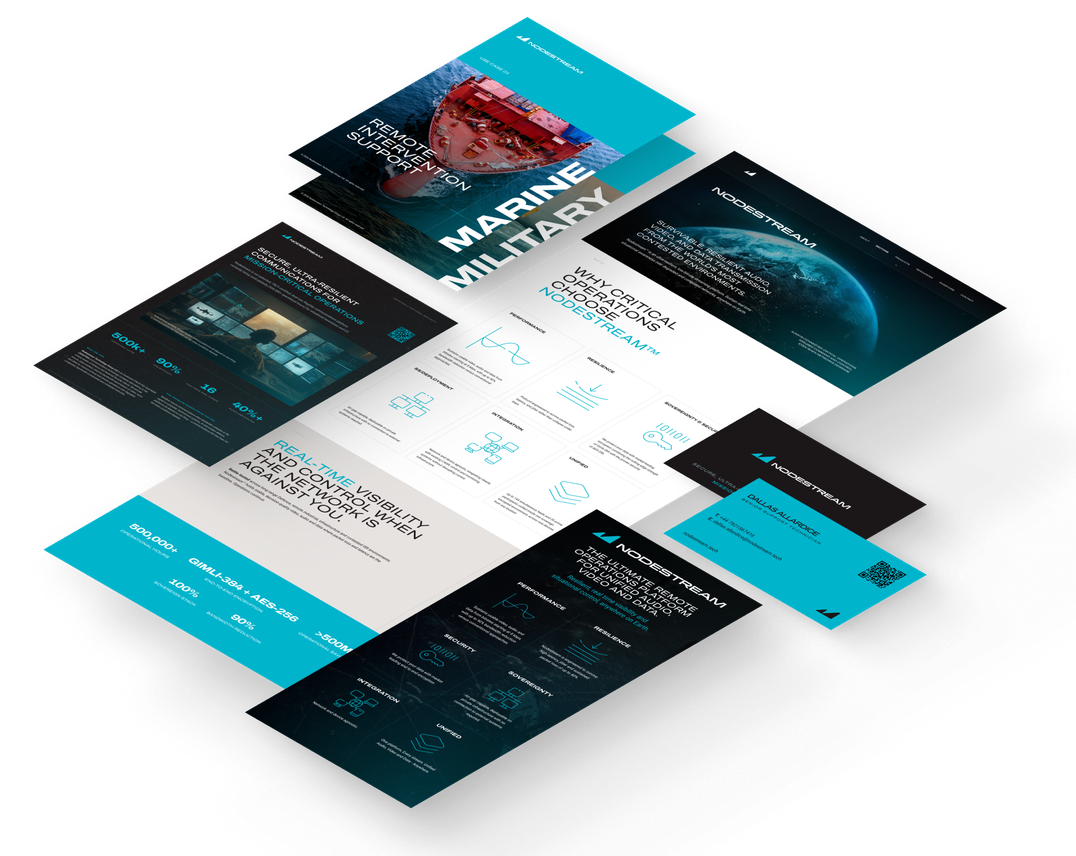
Harvest Technology Group was becoming NodeStream.
The change went well beyond a new name. The business was sharpening its market focus, changing how it wanted the technology understood and needed the marketing to reflect where the company was going next.
We worked through the repositioning and messaging, then carried that direction into the new NodeStream brand, website and sales material.
From there, the work kept changing with the business. Defence became a stronger priority. New industry collateral was needed. Product launches moved forward. Events created new opportunities. Sales conversations needed different tools.
Because the same team stayed across the work, each new requirement built on the strategy already in place.
The difference
NodeStream now has a marketing system built around the direction of the business rather than a collection of disconnected outputs.
When the market focus changes, the collateral, product marketing, sales material and communications can change with it without rebuilding the story each time.
A specialist industry document developed through this work also helped secure an invitation to an invite-only industry event, giving the team access to prospective customers that are otherwise difficult to reach.
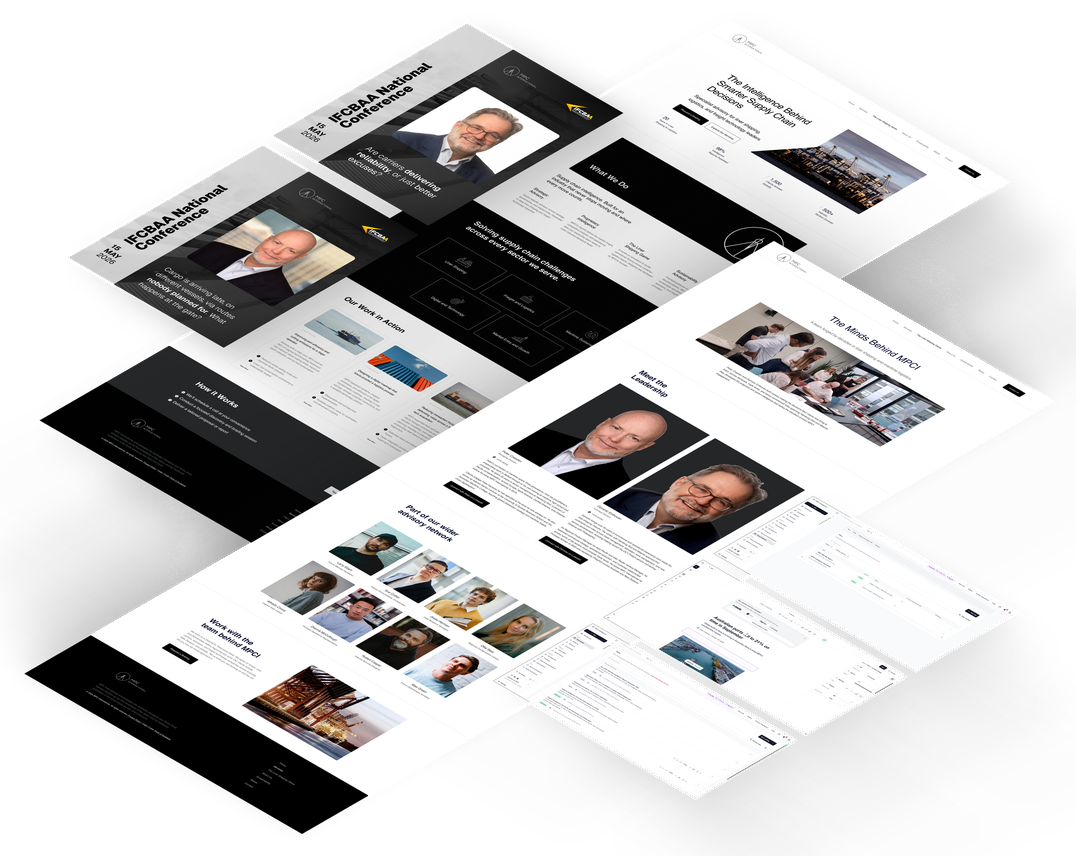
MPCI already had respected industry insight and an established audience.
The opportunity was to turn that into a clearer communications service that people could understand, subscribe to and buy.
We refreshed the brand, then worked through how the subscription offer should be structured and presented. From there, we built the communications platform around it, including the newsletter experience, subscription tiers, landing page, sales material, Beehiiv migration and Stripe integration.
The work moved from brand into offer structure, communications, sales and ongoing delivery, with the same team carrying the thinking through each stage.
The difference
MPCI moved from having valuable content and an audience to having a more structured communications service around it.
The offer now has defined subscription levels, a dedicated communications platform and a clearer path from audience to paid subscriber.
The brand, newsletter, subscription model, landing page and sales material were built around the same service rather than developed as separate jobs.
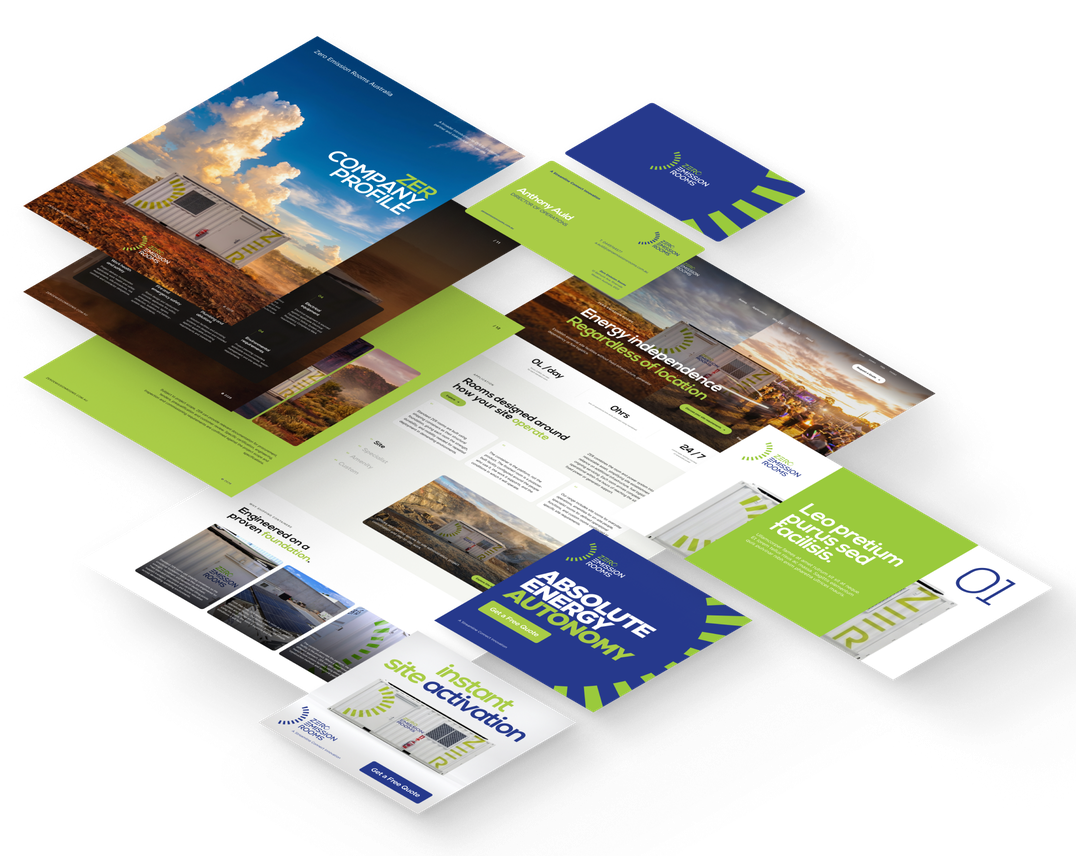
ZER already had the product.
The issue was how the product was being understood. The rooms could easily be reduced to features, specifications and components, which did not communicate the operational value behind them or give the business a clear position to take into market.
We started with the commercial problem. We worked through the customer, the operating environments, the buying context and the reason the product mattered.
That led to a clearer position around power certainty and energy independence, supported by a recognisable identity and a more consistent way to present the product.
The difference
ZER moved from presenting a collection of product features to presenting a clearer commercial proposition.
The business now has a defined way to explain the value of the rooms across remote, regional, urban and sensitive operating environments.
That position gives the sales and marketing work a clear direction, so new material does not have to reinterpret the product each time.
Pricing
Every package gives you the breadth of the Sensoriium team. Choose the level that matches your pace.
FAQ
A few things usually come up once businesses understand how we work.
Traditional agencies are often engaged to deliver a defined project. Sensoriium works across the marketing function, helping set priorities and bringing in the people needed to deliver them.
No. Tell us what is happening in the business and what you are trying to achieve. We turn that into the priorities and actions required.
We change the plan. How quickly depends on your package, from monthly through to daily flexibility.
No. The engagement can move across the disciplines in the Sensoriium team, with the mix changing to suit the work.
Yes. We work alongside internal marketers, sales and leadership teams or existing specialists. We fill the gaps and keep the work connected.
Yes. If a developer, media buyer, PR partner or other specialist is working well, we work with them. We do not need to replace good people.
No. The engagement is managed around agreed priorities and delivery. We manage team allocation behind the scenes.
Yes. A website build can run alongside social content, email or launch activity. Your package sets how much stays active at once.
You can move to a higher level when you need more pace, flexibility or involvement. If the workload reduces, the level can be reviewed again.
You work with the people needed for the work. Senior marketing direction sits across the engagement, with specialists brought in as priorities move.
We start with your business context and current priorities, then build the first priority plan and allocate the team. The exact start date depends on onboarding capacity.
Next step
You do not need a finished brief or a list of marketing tasks. Tell us what is happening in the business, what you are trying to achieve and where marketing needs to work harder.
We’ll talk through the priorities, where Sensoriium could fit and the level of support that makes sense.